
Photography
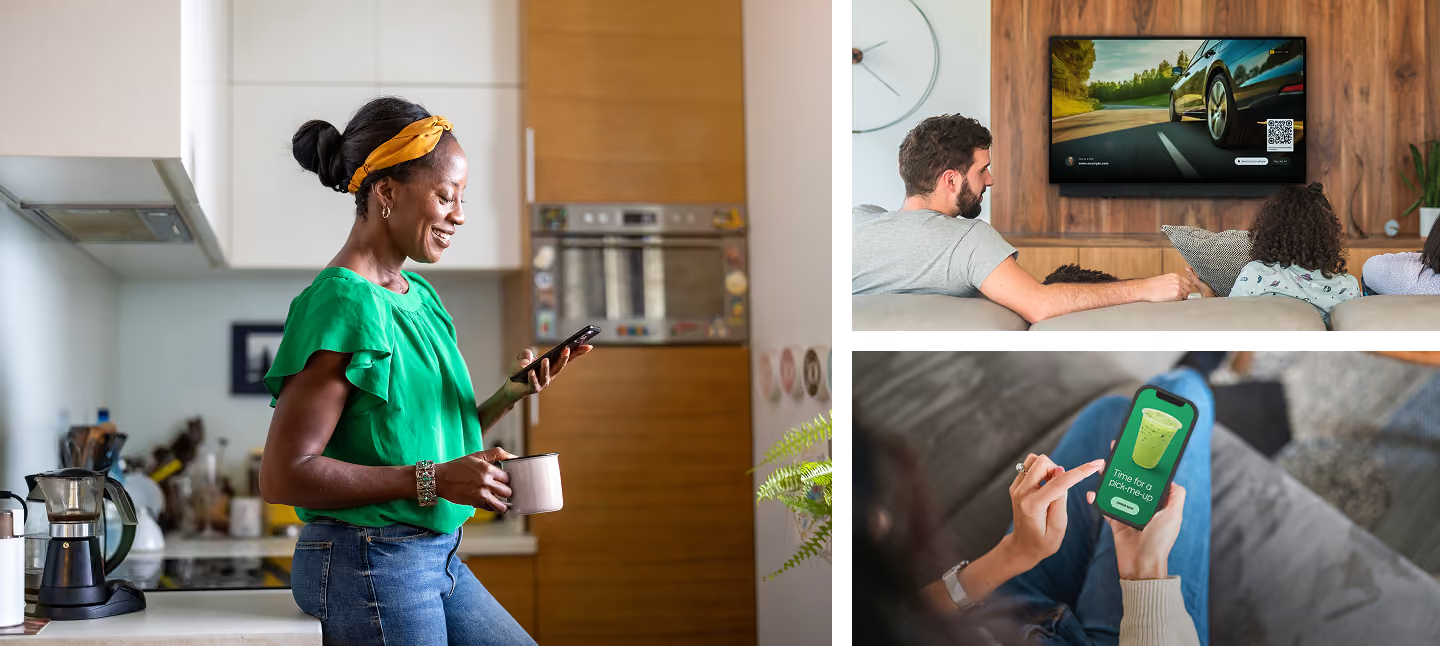
Our people-focused photography evokes the tone and spirit of our brand pillars—Approachable, Trustworthy, and Inspiring. All visual decision making ladders back up to these central brand concepts.
LiveRamp imagery puts the customer at the center of the story, capturing candid interactions among colleagues and end consumers. Intentional curation and color correction of imagery help unify photography across brand assets.
LiveRamp photography core requirements
The six requirements outlined below are non-negotiable when selecting, curating, and producing LiveRamp imagery. Use these requirements to guide decision making and ensure brand consistency in tone, look, and feel.
The primary camera angle should be positioned from an eye-level perspective. An alternate over-the-shoulder shot can be used when screen content is key.
Gives the viewer a sense they’re part of the story.
The overall tone of the image should be positive. Facial expressions should reflect engagement and curiosity.
No dark or long shadows, and environments should be light and bright. No overly happy or unrealistic expressions and poses.
There should be digital devices visible, grounding the image in the context of LiveRamp's products, services, and industry.
Defining subject matter that resonates with the audience.
Photography should feel real, with minimal retouching, and natural even lighting. People should reflect diverse backgrounds and cultures.
Scenes and poses should avoid AI-style polish, effects, or filters—subtle imperfections are ok.
Support concepts of collaboration and team problem solving by including a minimum of two people when depicting LiveRamp customers.
Unless core to the story, avoid using single individuals locked into a screen, as this often feels isolated and cold.
Environments should be natural, recognizable, and pared back. The focal point should be clear.
Nothing arbitrary—imagery should directly relate to the subject.
Photography representing LiveRamp customers
LiveRamp photography falls primarily into two categories; representing LiveRamp customers – people at work – and end consumers – people and audiences experiencing served advertising. For would-be LiveRamp customers, we typically show teams in small groups, in real-life environments. Candid moments may include studying data or digital content, brainstorming, coming together in meetings, and team collaboration.

Setting the camera angle positioned from an eye-level perspective invites the viewer into the story. Imagery should feel positive and natural.

Imagery should feel collaborative and candid, with expressions that reflect engagement and curiosity. Environments should be light and bright, avoiding dark or long shadows. A shallow depth of field keeps the focal point clear.

Showing a range of workplace scenarios reduces the saturation of typical subject matter of teams just studying data. The goal is to provide real-world environments that feel authentic and relatable for the viewer.
Extra image here ... showing diversity
LiveRamp photography representing end consumers
Consumers of digital advertising and content, in moments of engagement and interaction. Whenever possible we try and reflect the industry or market relevant to the intended audience.
Just as with the imagery above, please follow the six photographic requirements when sourcing images for end consumers.
Audience industry: Travel & Hospitality
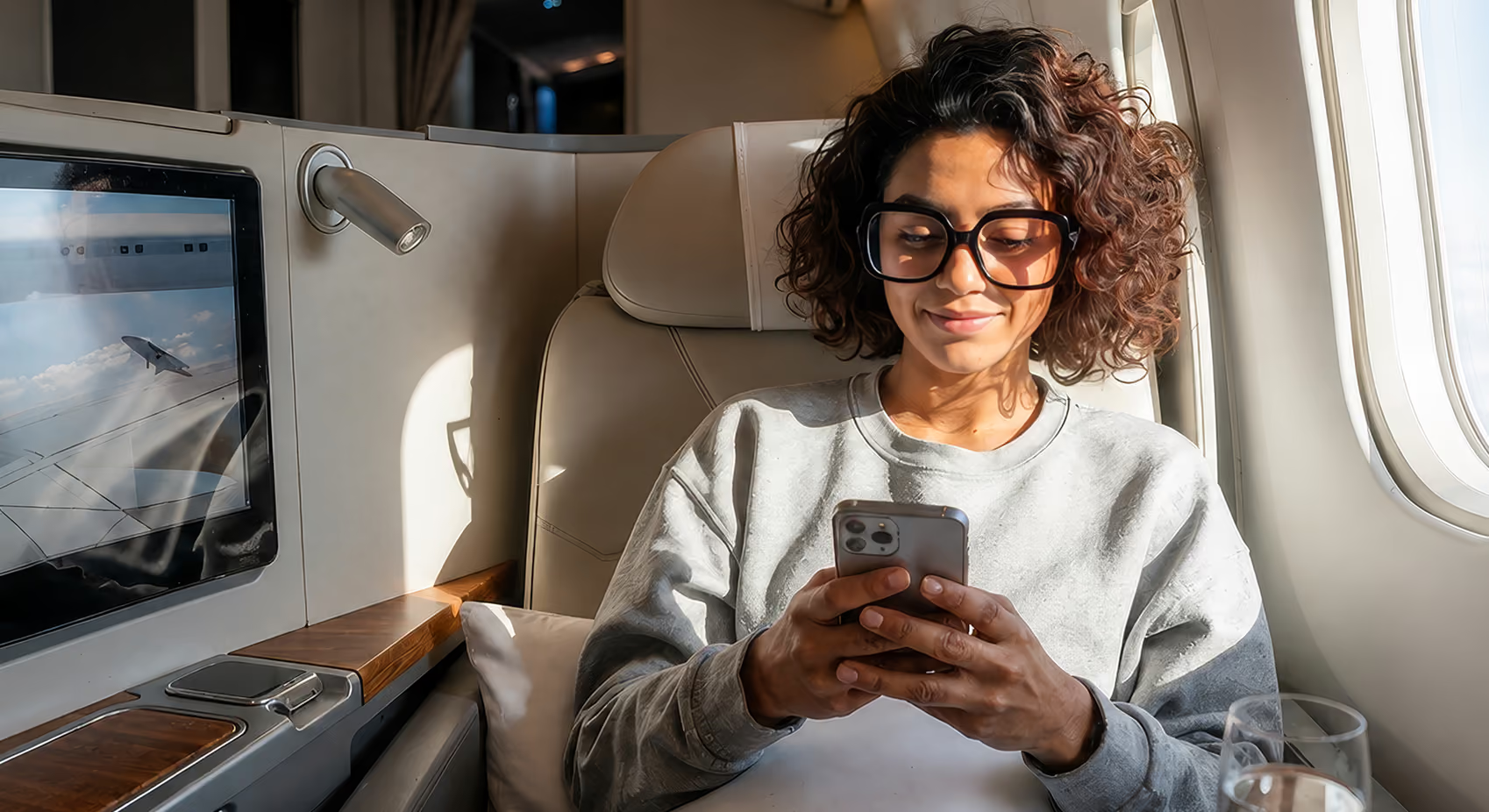
Audience industry: QSR

Audience industry: Gaming
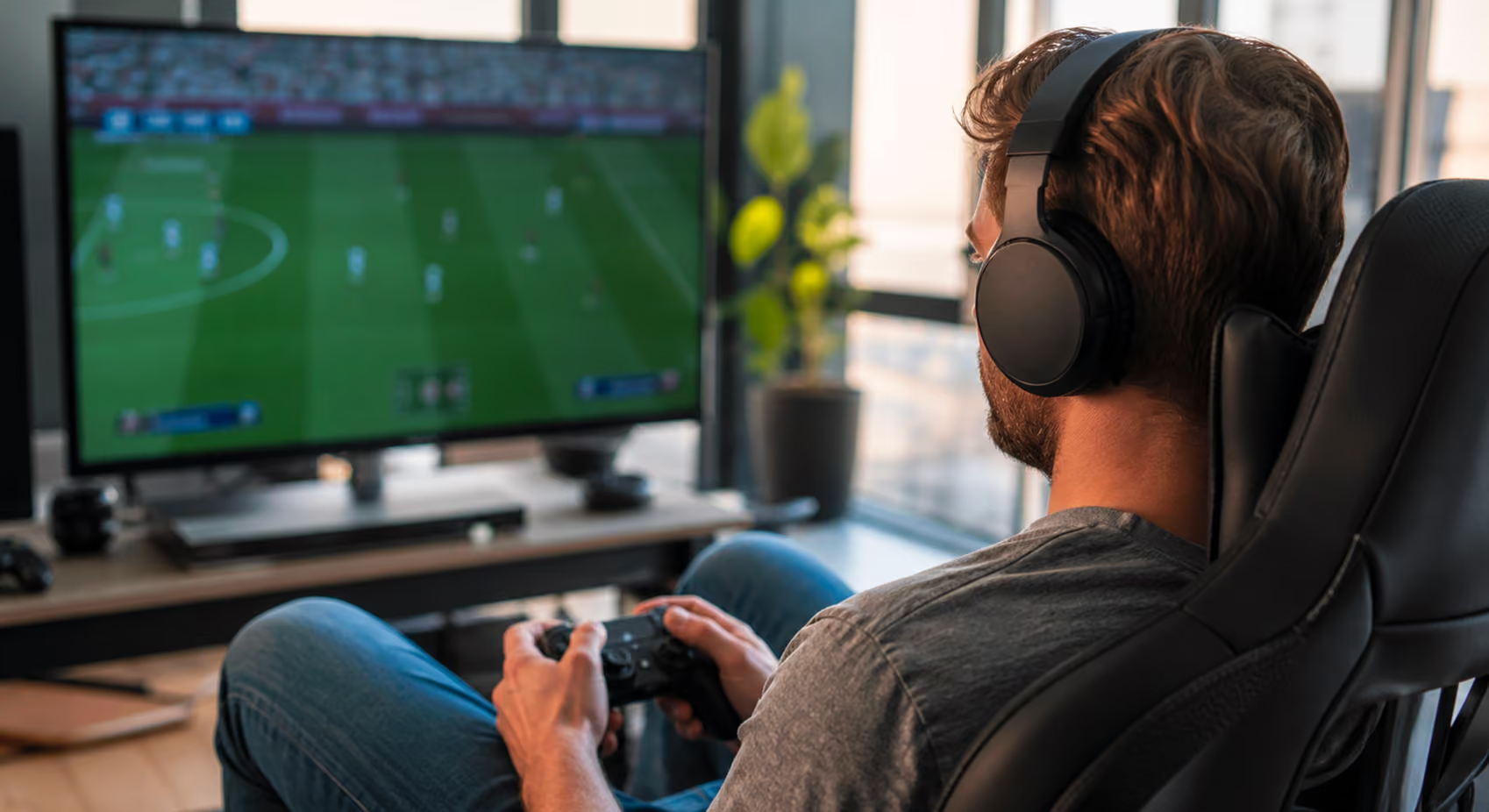
Audience industry: Retail or QSR
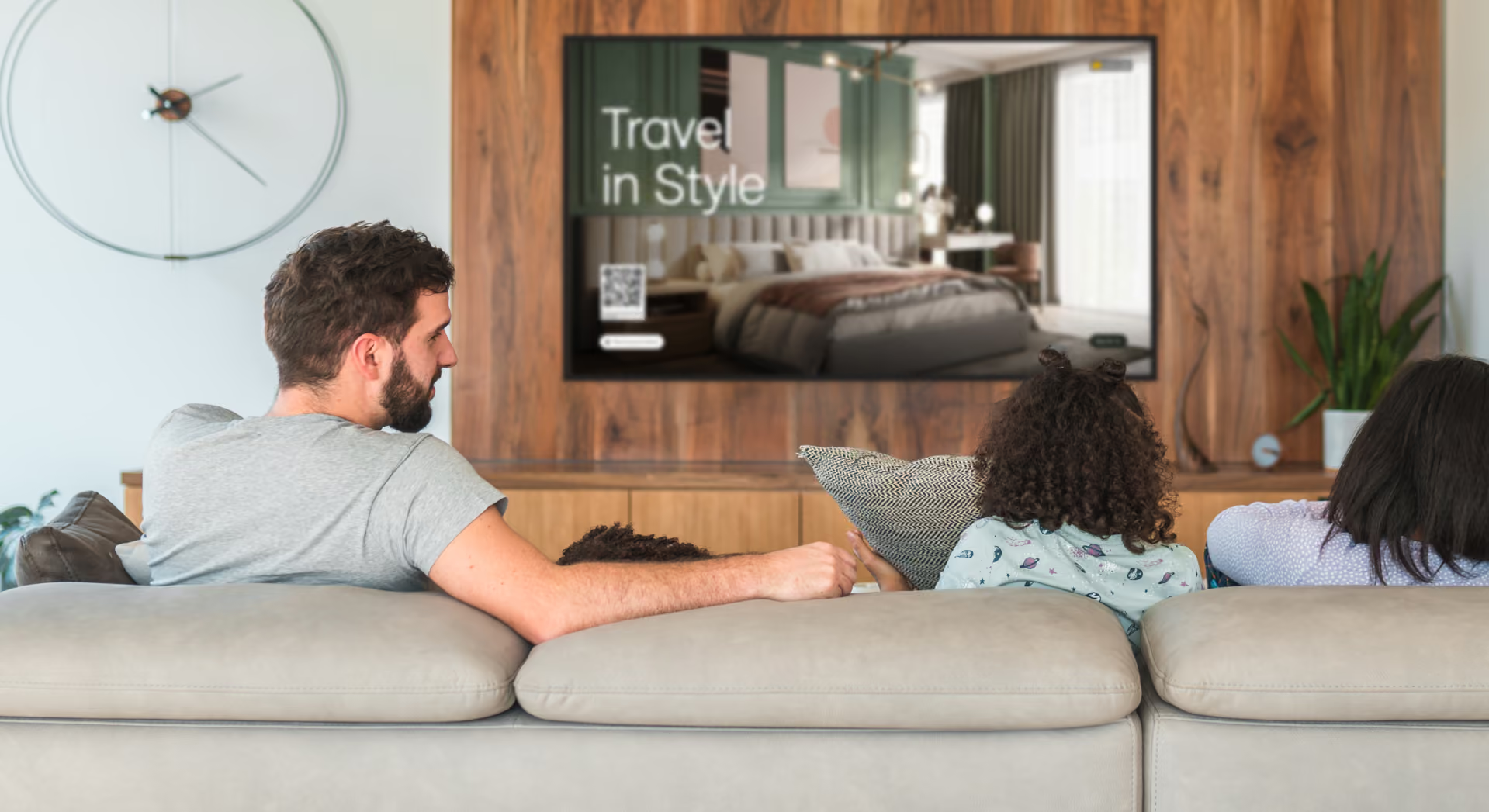
An alternate to the primary camera angle for first-person perspectives, the over-the-shoulder shot is useful when screen content is key. With this angle we make the ad or digital interaction the focal point, adding important context for the viewer.

Audience industry: Travel & Hospitality
Ad mockups can also be a secondary visual element of the image – the below image incorporates a travel ad for CTV.
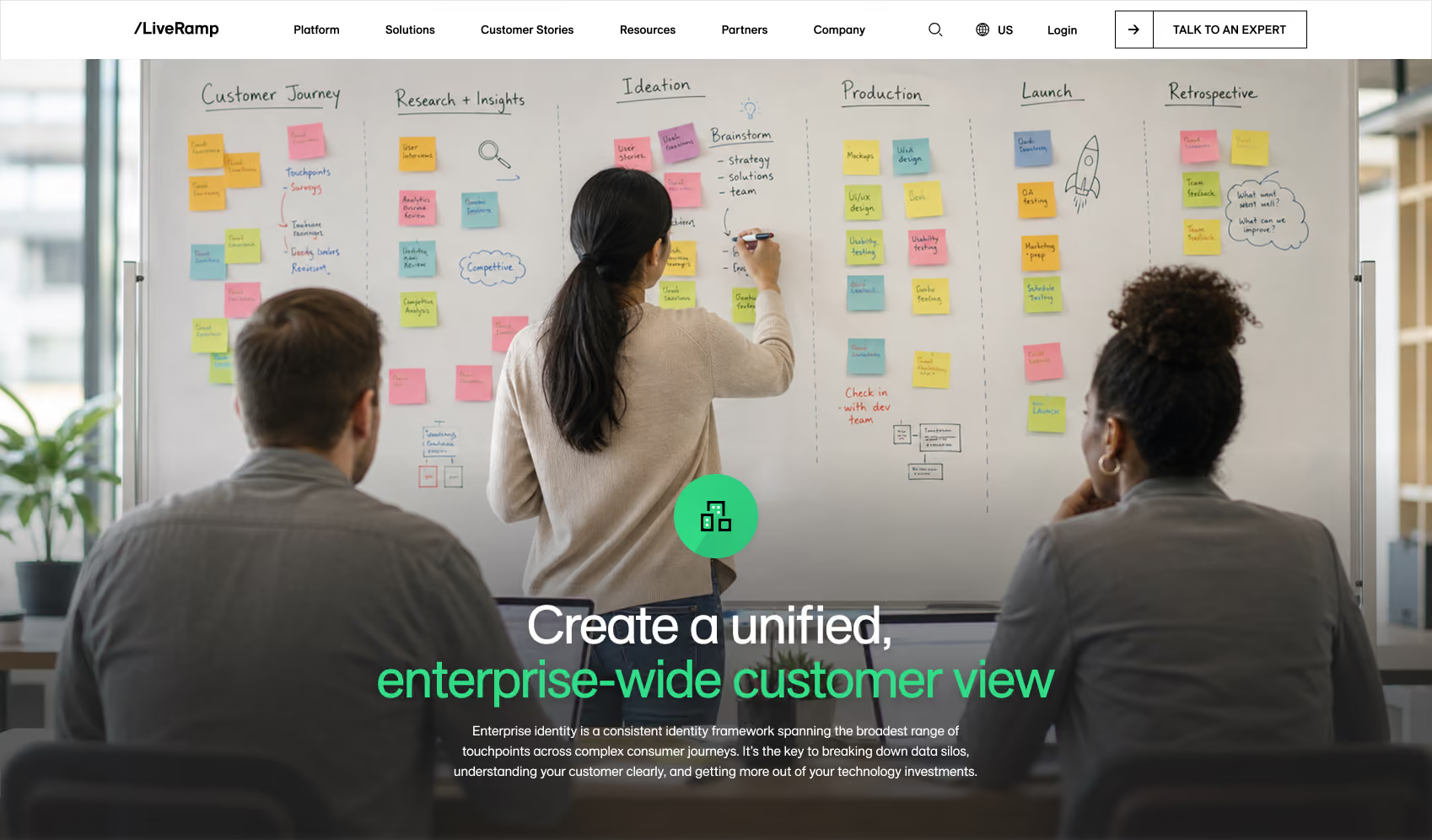
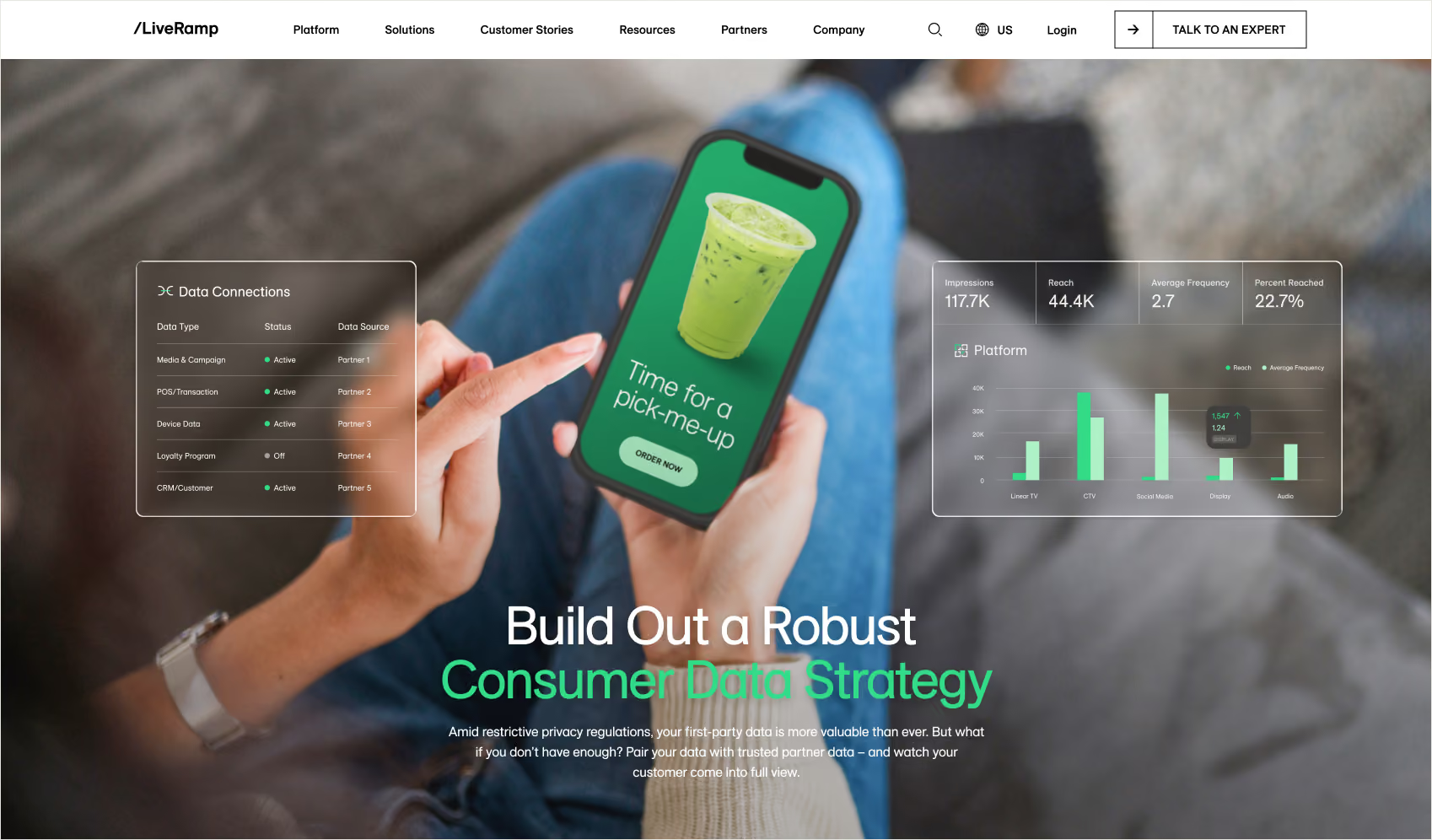
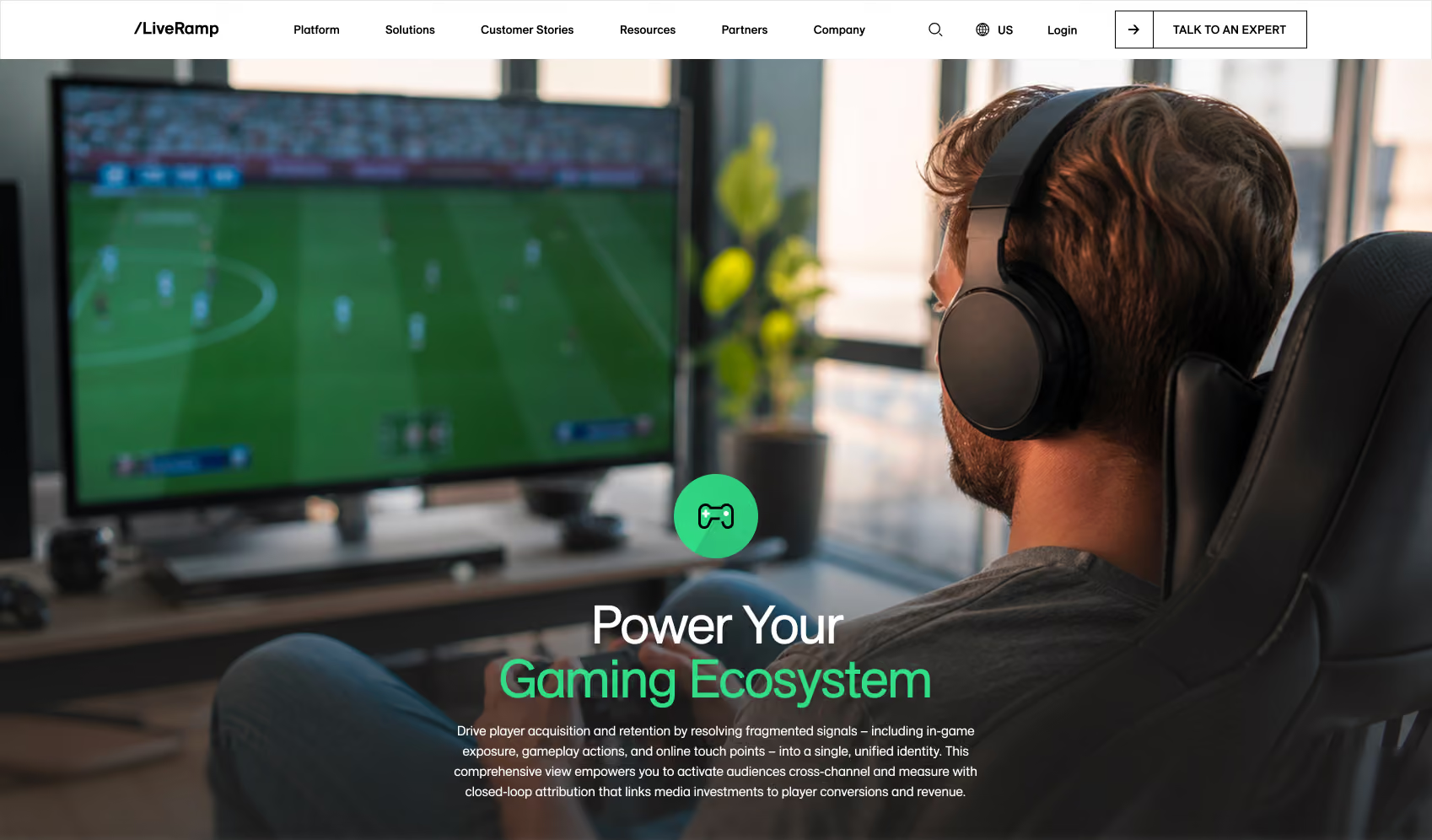
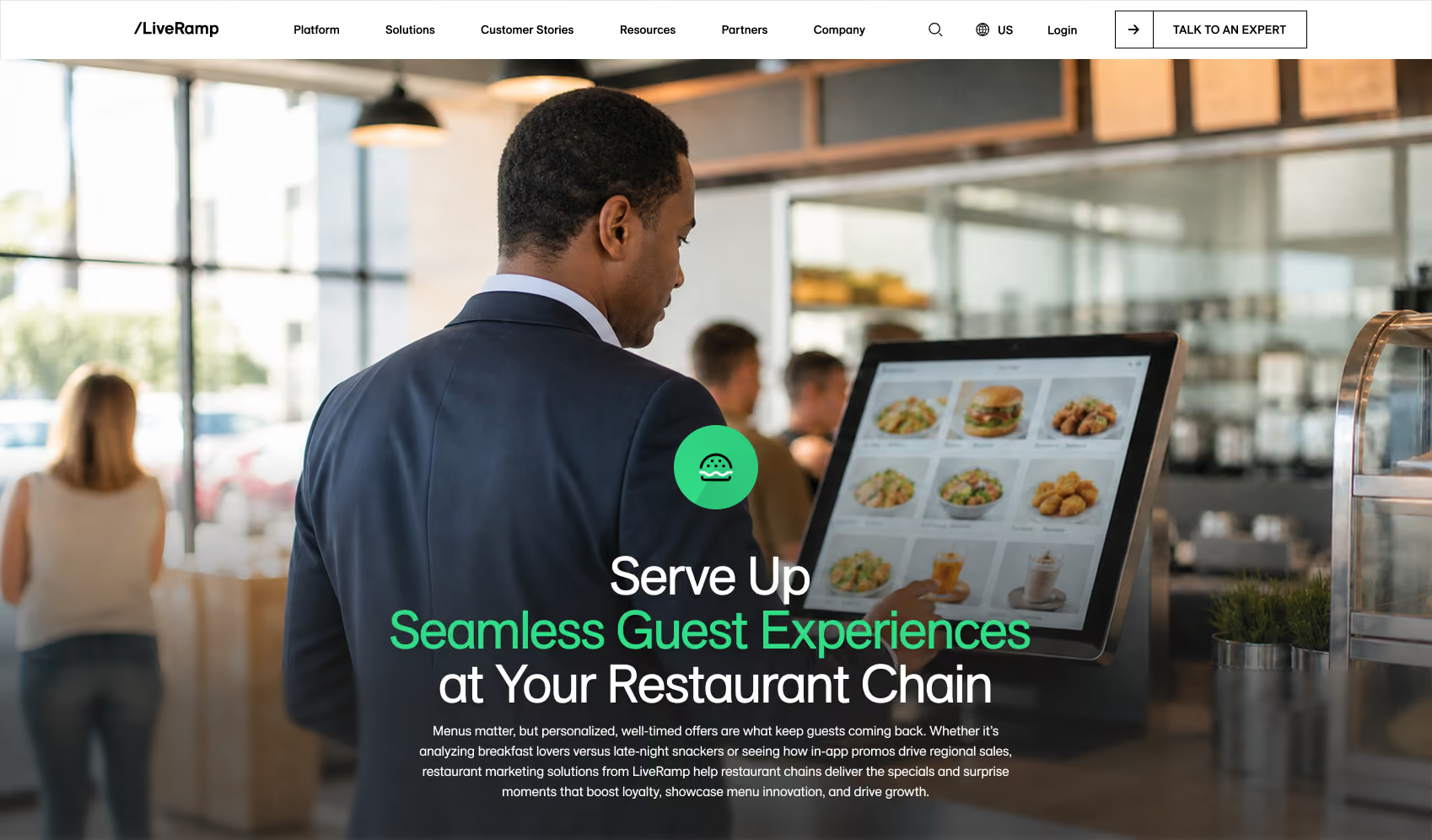
Photography in-use: Web hero banners
When composing the image alongside typography, UI elements, or additional graphics, please keep in mind the primary focal point and how the composition supports the message. Where necessary, slight color overlays can be set on top of imagery to improve text legibility.


Customer testimonials: Headshots
When capturing customer testimonials, we set the customer in front of a warm gray backdrop – #F5F4EF. Customers are invited to wear business casual clothes and neutral colors when possible. The warm gray backdrop allows us to add branded elements such as color and typography when creating promotional or marketing assets, as displayed in the examples below.






Customer testimonial photography: web page hero banner
Partner case studies
For partner use cases that do not fit neatly into our produced in-person customer testimonials, we combine an appropriate stock image with the company logo aligned to the center. Using this approach we differentiate from our own image style, but maintain a cohesive visual experience for this use case.

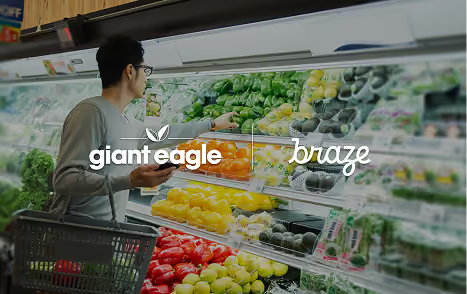

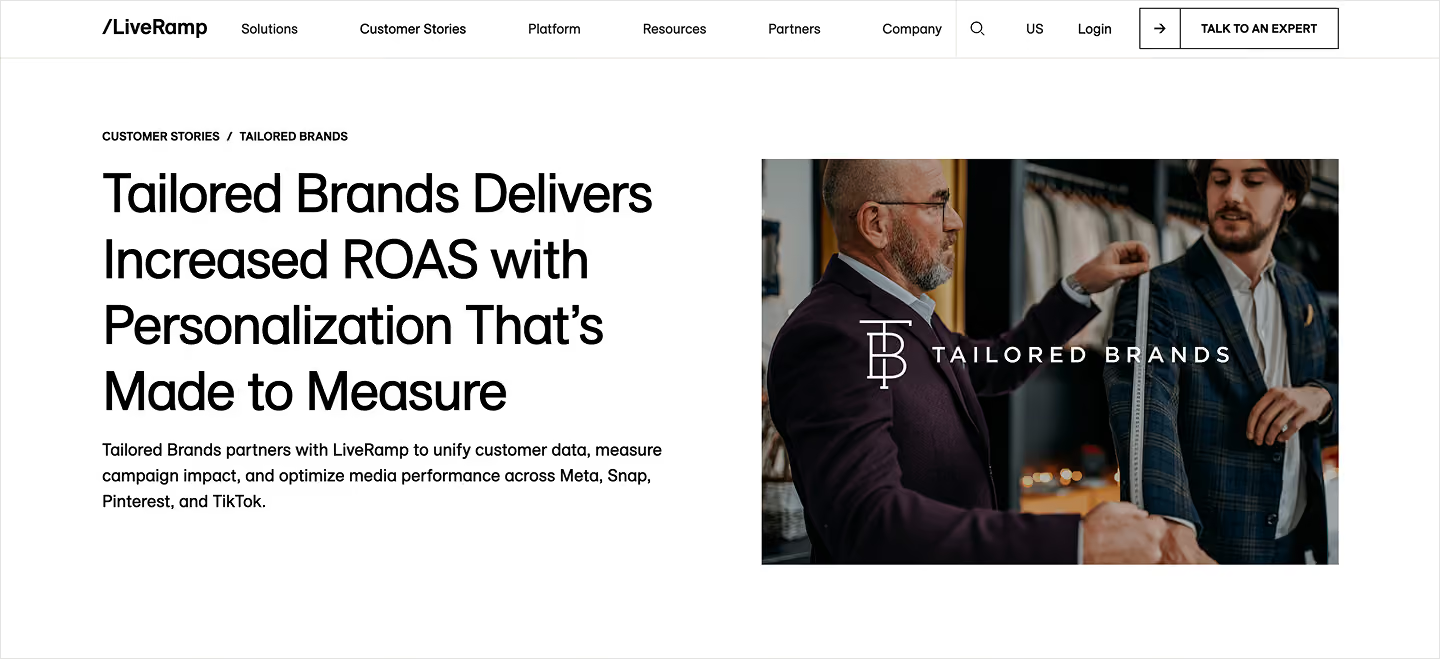
Customer testimonial photography: web page hero banner
Please avoid the following:
To maintain brand integrity, please do not implement any of the following techniques when producing LiveRamp imagery.



Imagined or fake realities

Composite visuals that combine photography and graphics

Filters or effects that distort images

Visual or industry tropes

Cluttered compositions where it’s hard to discern a focal point

Photography that goes against the positive tone of the brand voice

Adding color overlays to photography

Using black and white photography


